TASK 3 - QUALITATIVE AND QUANTITATIVE RESEARCH

TASK 3, QUAL-QUAN RESEARCH
GERALDINE ALEJANDRA TORRES
MANUEL FERNANDO VEGA GORDILLO
JORGE ARMANDO BAUTISTA
Qualitative and Quantitative Research
MARÍA ISABEL FUENTES
Tutor
Universidad Nacional Abierta y a Distancia UNAD
Licenciatura en Lengua Extranjera con énfasis en inglés
Escuela de Ciencias de la Educación
Bogotá, 08th of January - 2021

INTRODUCTION
Qualitative and quantitative research becomes the process by which the social, economic and political aspects of a context become immersed or part of a culture, the teaching-learning process takes over time a new style, new concepts and it requires attending to the globalized dynamics of education.
That is why we must look at the educational system of a country and perhaps critically compare the reality of our country in the Education sector. Research allows us to analyze, compare, identify, inquire and understand not only the educational realities of contexts but also allows us to offer solutions to problems, be part of a research process and provide improvements and solutions. Teachers do not have the classroom for us to only carry out a teaching process, we must have an open classroom and be willing to receive the knowledge and help of external professionals who direct their work towards improving our needs, we can cite clear examples; How does a teacher act in the face of the inclusion process, yes, prior to this, he had to read and documentary how to exercise his pedagogical work from the psychological, social and relational scope of the learner. On the other hand, immersed in inclusion, a monitoring process from health providers and other institutions or organizations that become participants in the educational process.
The above allows us as future teachers to be able to recognize the reflection action of the pedagogical task and be willing to take action from outsiders who offer direct and indirect help to Education through the investigative reference of qualitative and quantitative processes.
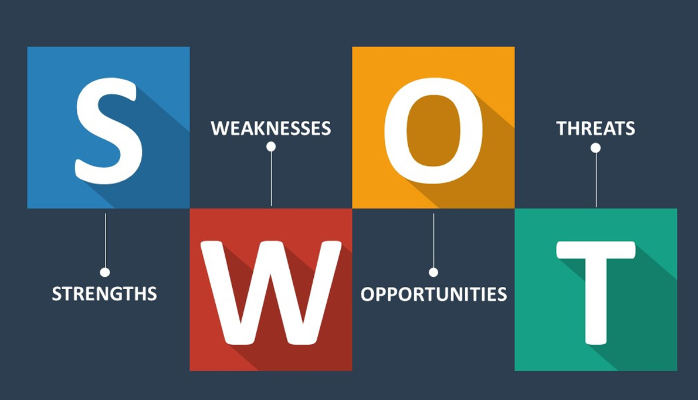
INDIVIDUAL SWOT
Jorge A. Bautista


Geraldine A. Torres


Manuel F. Vega

GROUP ANSWERS TO THE QUESTIONS
Jorge A. Bautista
What was the motivation of the project?
To date, no studies have found home-educated students to have lower achievement test scores, on average, than public school students.” Brian Ray. For that reason, I consider the project was focused on the reasons because home–educated students have better results in tests, for example. It is curious to know that students are being very well educated at home than in public or private schools and evidence has demonstrated that, in particular by tests.
What are the key research questions and how were they investigated?
Is homeschooling effective in comparison to public and private education regulated for the state? “examining the academic achievement of the home-educated population” Brian Ray
“classified by gender, amount of money spent on education, family income, whether either the parent had ever been a certified teacher (i.e., students of noncertified parents scored higher), number of children living at home, degree of structure in the homeschooling, amount of time a student spends in structured learning, and age at which formal instruction of the student began.”
Is this quantitative or qualitative research?
Qualitative because it is focused on descriptive statistics.
Geraldine A. Torres
1. What was the motivation of the project?
The motivation of the writer has been to promote homeschooling using the qualitative research method first to study a certain population and then he made use of the quantitative research method to obtain the results of the tests and based on that create a safe analysis.
2. What are the key research questions and how were they investigated?
Some of the key research questions were:
- What, then, are the learning outcomes related to this form of schooling that is often not regulated at all by the state?
The government, together with other entities related to education, created standardized tests in order to monitor the performance of the education that people were receiving together with their children at home.
- What about socialization?
This question is better known as question S, which was designed to monitor students in each of their homes, regarding their mental and emotional health, and this type of test showed that even with children who were being educated at home and were having better emotional development than the children educated in public schools.
- Why is homeschooling not supported by the education system?
What is sought with this is simply to prioritize society, in such a way that those with a better quality of life will be able to have greater access to studies and those who do not, will only be able to access basic studies.
3. Is this quantitative or qualitative research?
This study has certain features of qualitative research; however, it stands out for being more quantitative.
What was the motivation of the project?
I consider that the motivation to carry out the project is the need that is evident in the context, to remember education at home, the most important principles and values that should be fostered in future citizens from home.
What are the key research questions and how were they investigated?
According to the observation and intervention process, the evidence is detailed in the process in line with research with educators, the education system, and some social, emotional, and psychological aspects of children who are educated at home.
Is this qualitative or quantitative research?
When reading the research, it can be considered in the abstract that it is qualitative, however, when reaching a series of analyzes, the research has resulted in percentages according to consultations or results of the process. Personally, I consider that the research has a qualitative style, developing observation strategies, source inquiries, and interviews.
INDIVIDUAL RESEARCH
Jorge A. Bautista
My research has as its focus and main theme education by virtual modality, this would be qualitative research, because I would like to venture more into the causes, advantages, disadvantages, among other things. Taking into account that education by virtual modality was not created due to the Covid-19 pandemic but that this type of education, in particular, was a vital tool for society, so as not to get stuck.
I would like to start my research from the birth of technology, its causes and its purposes, do analyzes and surveys in which different types of people are taken into account, among them I could have an elementary school student, a high school student, a college student, and a clerk employer because they too took advantage of technology tools.
Also, I would like to add something from my personal experiences because I have always done my university studies by virtual modality. To conclude, I would like to carry out a general analysis of my experiences and those of the people I include in my study.
A method that I would also be interested in trying would be the SWOT system since although virtual education has helped us on multiple occasions it has also been a boost for those who are a bit lazy in studying, and no, the fault is not on education by virtual modality but from the education in values that each student developed, but then it is here where one could ask oneself things like:
Is education by modality good or bad?
Education by virtual modality is always and will be good, the rest will depend on the use and responsibility of each 1 of the students or people who are related to this medium, but if there is no adequate use of this mechanism then the evidence of learning will not they will be as expected since people will not develop their intellect.
What does the virtual modality do to instill a good moral education in students?
This is one of the cons, although virtual education is a very good tool, it does not help to develop a completely correct ethic, since this already depends on each person, if they really do a job in the correct and honest way or do not.
After the pandemic, should this mechanism continue to be used?
Yes, since this tool has been of great help to make education more practical, and with many digital tools that facilitated teaching not only for teachers but also for students.
For a research process, I want to share a qualitative process, which allows reaching useful conclusions in the professional process, taking into account the lack of motivation of some students in learning the second foreign language, I would like to detail by addressing the importance of Motivation in the school process, reviewing the grades of students in recent years in state tests, participating in observation classes, formulating objectives, and being a participant in the process of collecting information through different techniques.
Answer the following question:
How to motivate basic knowledge of English using technology, applying games and didactics in the process with the students of the "J.P" School, in the city of Bogotá?
Research questions | General Objective | Specific Objectives |
What basic knowledge of English have the students of J P School developed?
What playful and didactic strategies do teachers use to strengthen vocabulary, grammar and English skills in students?
How can we obtain the operational curriculum in the process of teaching and learning of adults and young people so that they are motivated to speak the foreign language? | Design and implement a curricular program that appropriates the basic knowledge of English in the use of technology, applying play and didactics in the pedagogical process. | Identify the knowledge and domains of the foreign language that the students of the J P School have.
Design a curricular program that attends to the context and allows students to appropriate the basic knowledge of English.
Apply didactic and recreational strategies from technology with the students of J P School. |
REFERENCES:
Mr.Sinn. (2019, October 23). Qualitative and Quantitative Research [Video]. YouTube. https://www.youtube.com/watch?v=69qP8kFJp_k&feature=emb_logo
GetPsyched. (2018, August 27). Qualitative vs Quantitative – Understanding Qualitative and Quantitative Research [Video]. YouTube. https://www.youtube.com/watch?v=HCnNLJdYGK4
Tine Wade. (2017, May 1). Qualitative & Quantitative – An Introduction [Video]. YouTube. https://www.youtube.com/watch?v=RYmLE8UqCXU
PlanningTank. (2017, March 3). The differences between Qualitative and Quantitative research [Video]. YouTube. https://www.youtube.com/watch?v=MkntLkg9S3Q
Harmon, A. (2020). SWOT analysis. Salem Press Encyclopedia. https://bibliotecavirtual.unad.edu.co/login?url=http://search.ebscohost.com/login.aspx?direct=true&db=ers&AN=100259317&lang=es&site=eds-live&scope=site
Comentarios
Publicar un comentario